Integrity Lift Compliance

Façade Access Compliance

BMU & Cradle Inspections in London

Independent engineering inspection of Building Maintenance Units, cradle systems and façade access plant on commercial towers and high-rise estates across London. We coordinate with FM teams, window-cleaning contractors and building owners to deliver disruption-free statutory examinations. The report, with photographs, comes the same day, and we remind you before the next one is due.

26+ Years Hands-On Engineering Experience
Independent of Maintenance Contracts
7 Days a Week, 6am to 6pm
Same-Day Reports, With Photos

Certificate expired or lift out of compliance? You're exposed to enforcement action, and your insurance may not respond, until it's resolved. What to do.

Call Office, 07496 873972
Written and reviewed by Mark Crowley, Director, Integrity Lift Compliance Ltd — 26+ years of hands-on lifting equipment engineering. NHS estates, commercial property and industrial lifting compliance.

Engineering Approach

What our BMU & cradle inspection programme delivers

Independent, defensible statutory examination by an engineer with deep hands-on plant experience.
  • Six-monthly statutory thorough examinations for BMUs and suspended cradles
  • Wire-rope, hoist, davit and counterweight engineering inspection
  • Examined against BS EN 1808 — the standard for suspended access equipment — together with the manufacturer's own criteria, rather than a generic lifting-equipment checklist
  • Anchor pull-test verification for abseil and fall-arrest points
  • Rope-access supported inspections where roof-rig configurations require
  • Discreet scheduling to avoid disruption to commercial tenants
  • PUWER 1998 maintenance and safe-use duties addressed alongside the LOLER examination
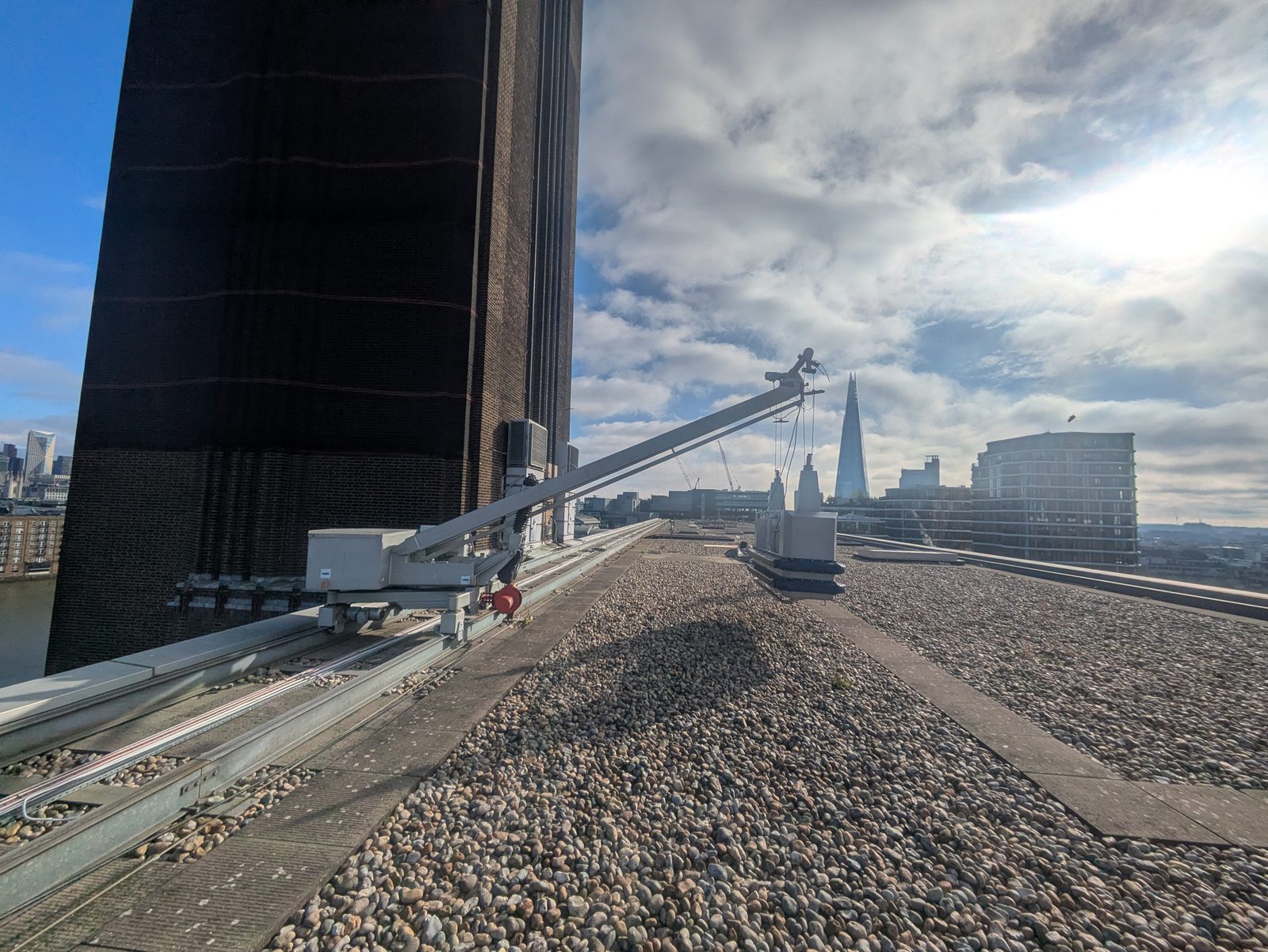
A BMU and its track on a London rooftop.
A BMU and its track on a London rooftop. Both the unit and the track it runs on fall within the scope of a thorough examination.

What a BMU inspection covers

A BMU carries people over the edge of a building, so the examination covers the machine, the cradle and everything that would stop a fall:

  • Machine and structure: jib, trolley, mast, slew and the roof track or rails with their fixings
  • Hoists and wire ropes: hoist units, ropes, terminations and rope stowage
  • Cradle: platform, guardrails, toe boards, gates and anchor points
  • Brakes and secondary devices: service brakes, overspeed or secondary brakes and fall-arrest devices
  • Limits and overload: travel, slew, top and bottom limits, overload and tilt protection
  • Emergency descent: the means of bringing the cradle down or recovering people if power fails
  • Controls and communication: cradle and roof controls, emergency stops and the means of calling for help
  • Power and cables: supply, cable reels and cable condition

Secondary braking and emergency descent are tested, not just looked at, because they only matter when everything else has failed.

Why BMUs are six-monthly

LOLER 1998 Regulation 9 sets six months for lifting equipment that carries people, and a BMU cradle does. The roof track or rails are part of the installation and are examined with it. Fixed anchors for abseil and fall arrest are usually tested separately, typically every twelve months, and can be done on the same visit.

What does a BMU cradle thorough examination involve?

What you get after the inspection

A Report of Thorough Examination with everything LOLER Schedule 1 requires — including the BMU identified, the date examined, its safe working load, any defect with what must be done and by when, and the date the next examination is due — with each defect graded by severity. On top of that:

  • Same-day report: issued digitally on the day of the inspection, not weeks later
  • Photographs: of what was inspected and of any defect, in every report as standard
  • Records and reminders: we keep the record on file and remind you before the next one falls due

If anything is not safe to use, you are told in writing before we leave. Because we sell no repairs, a defect on the report is never a quotation in disguise.

Assets We Examine

Asset classes covered under our BMU & cradle inspection programme.

Building Maintenance Units

Examination of roof-tracked BMUs, telescoping access cranes and large traversing rig installations on commercial towers.

Suspended Cradles

Thorough mechanical and wire-rope inspection of permanent and temporary high-rise cradle platforms.

Davit Arms & Sockets

Examination of structural davit stations, sleeve sockets and counterbalance assemblies for window-cleaning rigs.

Roof Track Systems

Inspection of monorail and curved-track gantry systems used to deploy cradles on complex façades.

Abseil Anchor Points

Pull-test verification of eye-bolts, post anchors and fall-arrest lines used for rope-access window cleaning.

Horizontal Lifeline Systems

Inspection of horizontal lifeline systems, retractable fall-arrest blocks and roof safety lines.

Trusted by Critical Estates

Independent. Defensible. Genuinely Endorsed.

SAFed-aligned defect classification, and the endorsement below is a genuine NHS Trust quote — not stock marketing copy.

NHS
NHS
Critical estate passenger lift compliance experience
SK
Skanska
Construction & engineering compliance support
A·B·C
SAFed-Aligned Defect Grading
Defects graded A, B or C to the published SAFed severity scale — a grading standard we follow, not a membership we hold
DBS
Enhanced DBS
Director Mark Crowley holds an enhanced DBS check
NHS Trust Endorsement
“Exceptional response times and thorough documentation. Managing compliance across multiple critical medical estates is complex, but their team makes statutory lift auditing seamless.”
Phillip Nai
Critical Healthcare Estates Manager
Barts Health NHS Trust

Areas We Cover

Independent BMU and cradle inspections across London.

Common Questions

BMU & Cradle Inspection FAQs

How often does a BMU need a LOLER thorough examination?

At least every six months, because a BMU cradle carries people. The examination covers the machine, the cradle, the ropes and the track or rails it runs on.

Are the roof track and anchors examined too?

The track or rails the BMU runs on are part of the installation and are examined with it. Fixed anchors for abseil and fall arrest are usually tested separately, typically every twelve months, and we can do both on the same visit.

Can you examine our BMU without disturbing tenants?

Yes. We agree the time with building management, keep the cradle away from occupied windows where we can, and work early or at weekends where needed.

Do you sell BMU maintenance or repairs?

No. We examine and report. Your maintenance contractor carries out any repairs, so a defect on our report is never a quotation.

Do temporary suspended platforms need examining too?

Yes. Any suspended cradle or platform that carries people is six-monthly under LOLER, and also needs examining after installation at each new location.

Can the BMU be used if its examination is overdue?

No. A BMU without a current examination should not carry anyone. Call us and say it is overdue and we will treat it as urgent.

How soon do I get the report?

The same day, with photographs. If anything is unsafe you are told in writing before we leave.

Request a Survey

Tell us what needs inspecting and where. We'll reply within one business hour.

Already have an asset list or examination schedule? Email it to info@integrityliftcompliance.co.uk and we'll come back with a survey plan rather than ask you to retype it.

Survey Request Form
Prefer to talk to an engineer?
07496 873972